
Moroccan Coffee (Nous Nous): The Famous Half-and-Half
Discover the famous Moroccan coffee, a unique blend of coffee and milk, for

Ever wondered how some goats seem to defy gravity by climbing trees? In Morocco, a peculiar sight has caught the eye of many. Goats are seen perched on argan trees, eating the leaves and fruits. This odd sight has sparked curiosity and questions about these agile creatures’ adaptability.
Exploring the world of these arboreal goats reveals the reasons behind their tree-climbing skills. You’ll also learn about the importance of argan trees in Morocco’s ecosystem.
In the southwestern regions of Morocco, a unique spectacle awaits those who venture into the argan forests. Here, you’ll witness goats climbing trees, a sight that has become synonymous with this part of the world.
Exploring the argan forests, your first sight of tree-climbing goats might surprise you. These agile creatures seem to defy gravity, balancing on the branches of argan trees as they forage for fruit.
The tree-climbing goat phenomenon is mainly seen in the argan forests of southwestern Morocco. The regions of Souss-Massa and Essaouira are famous for this spectacle.
| Region | Notable Locations | Best Time to Visit |
|---|---|---|
| Souss-Massa | Agadir, Tafraout | Spring |
| Essaouira | Essaouira City, Argan Forest Reserves | Autumn |
The sight of goats climbing trees is extraordinary for several reasons. It shows the adaptability of these animals and the unique ecosystem of the argan forests.
The goats’ agility and the argan trees’ twisted branches create a surreal landscape. It’s both fascinating and photogenic.
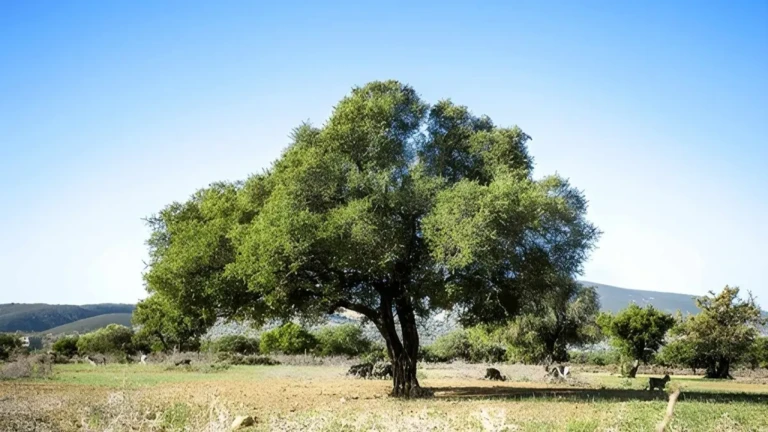
Exploring Morocco’s tree-climbing goats leads us to the argan tree ecosystem. This ecosystem is a balance of plants and animals that has grown over centuries.
Argan trees (Argania spinosa) are found only in Morocco. They can survive in dry conditions and provide food for animals like the tree-climbing goats.
The argan forest is home to many animals. Trees offer shelter and food, while the ground supports smaller creatures. This shows how vital the forest is for wildlife.
Argan forests grow in dry, hot areas. Trees have deep roots and thick bark to handle the heat and dryness.
Watching goats on argan trees makes you wonder why they do it. It’s not just for fun; it’s a complex behavior. Their climbing is driven by instinct, nutrition, and their environment.
Goats are agile and curious. They climb because it’s in their nature. This lets them get food that others can’t reach.
In Morocco’s argan forests, climbing is very useful. The trees have food that goats love.
The argan tree’s fruit is full of nutrients. Goats climb to eat it. The fruit has proteins and fats that help their health.
| Nutritional Component | Benefit to Goats |
|---|---|
| Proteins | Supports muscle growth and repair |
| Fats | Provides energy and aids in the absorption of vitamins |
| Vitamins and Minerals | Enhances overall health and immune function |
Goats climb argan trees for different reasons at different times. It depends on when the fruit is available. When other food is hard to find, the argan fruit is key.
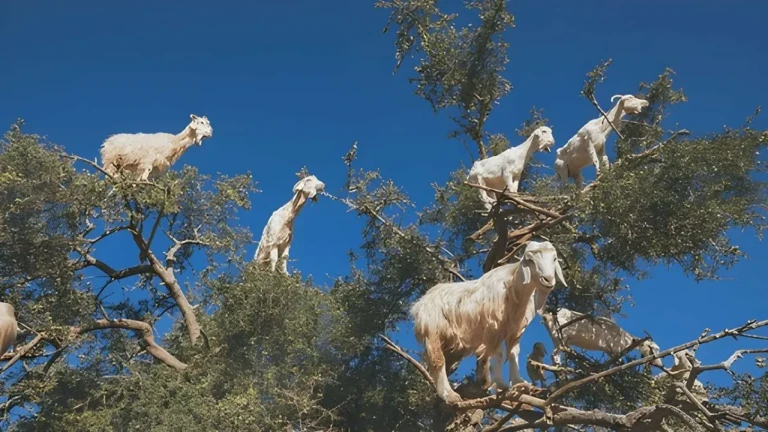
In Morocco, a special goat breed can climb argan trees with ease. Their agility and physical adaptations make this possible.
Their ability to climb trees comes from their flexible, leathery pads and sharp hooves. These features help them grip the argan tree’s slippery bark.
The goats also show great balance and coordination. They carefully distribute their weight and make precise jumps between branches.
Moroccan goats are different from other breeds. They have unique adaptations because of their environment. The argan tree’s fruit is valuable, and accessing it is a survival advantage for them.
Morocco’s tree-climbing goats are more than just a natural wonder. They are a key part of the region’s culture. For centuries, these goats have climbed argan trees, a tradition deeply rooted in local culture.
The Berber communities in Morocco have a long history of goat herding. These goats are not just a source of income. They also hold a special place in Berber culture. The sight of goats climbing trees is a big part of Berber life.
Many stories and folklore have grown around these goats. Locals love to share tales of how these goats thrive in tough environments. They also talk about how these goats help the local ecosystem.
Local communities have changed their ways to live with the argan forests and the goats. The argan tree gives food to the goats and oil that locals value. This oil is used in traditional cooking.
| Cultural Aspect | Description | Impact on Local Community |
|---|---|---|
| Berber Traditions | Rich goat herding practices | Integral to Berber identity |
| Folklore and Stories | Tales of goat adaptation | Cultural enrichment |
| Community Adaptation | Lifestyle centered around argan forests | Economic benefits from argan oil |
The cultural heritage of tree-climbing goats in Morocco is a mix of natural beauty and cultural importance. It shows the strong bond between local communities and their environment.
Morocco’s argan region is home to a surreal sight: goats climbing trees, a phenomenon worth experiencing. To make the most of your visit, careful planning is essential.
To witness the goats in trees, you need to visit the argan forests, mainly in Morocco’s southwestern part. The best way to get there is by flying into Agadir or Taroudant. Then, take a guided tour or rent a car to reach the argan forests.
When planning your trip, consider the time of year and the local conditions. The argan forests are relatively off-the-beaten-path, so preparation is key.
The ideal time to see goats in trees is during the spring and early summer when the argan fruit is ripe. The goats are most active during the late morning and early afternoon, on sunny days when they climb trees to feed.
Some of the best locations to witness goats in trees include the areas around:
Consider taking a guided tour to get the most out of your visit. Local guides can provide insights into the best locations and times for viewing the goats.
By planning your trip carefully and visiting during the optimal seasons, you’ll increase your chances of witnessing this incredible natural phenomenon.
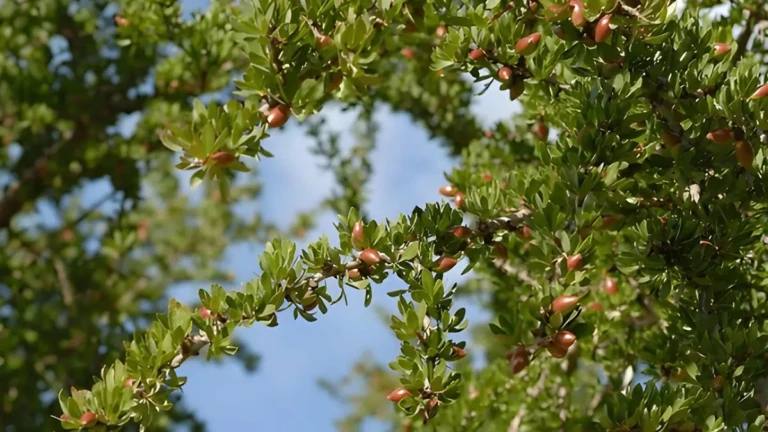
Argan tree goats play a key role in making argan oil. They start by climbing the argan trees and eating the fruit.
The goats help spread the argan fruit seeds. After eating the fruit, the seeds go through their system and come out. This often happens in a new spot where they can grow.
Argan oil used to be made by hand. This hard work involves cracking nuts to get the kernels. Then, the kernels are ground into a paste and mixed with water to get the oil.
Now, machines help make argan oil, making it easier. But, many stick to old ways to keep the oil’s quality and true taste.
Women’s groups in Morocco make a lot of argan oil. Helping them out supports fair trade and helps local people.
| Production Method | Traditional | Modern |
|---|---|---|
| Labor Involved | High | Moderate |
| Equipment Used | Hand tools | Mechanical presses |
| Oil Quality | High | High |
Making argan oil is a detailed process that needs goats and argan trees. By knowing and supporting this, we get great oil and help the environment.
The sight of goats climbing trees in Morocco is more than just a show. It’s a chance to practice responsible tourism. When you visit the argan forests, knowing how to interact with these amazing animals and their home is key.
Visiting the argan forests means following some important rules. Keep a safe distance from the goats to not stress them out. Also, never feed them, as it can mess with their natural diet.
Not every goat-climbing-tree spot is real. Some might be set up for tourists, which could harm the goats. Make sure to research your tour operators to find ones that offer real, natural experiences.
Helping to protect the argan forests and the goats is easy. Support local, sustainable tourism by choosing tour operators that help the community and the environment.
By being a responsible tourist, you can see goats in trees and help the local ecosystem and community at the same time.
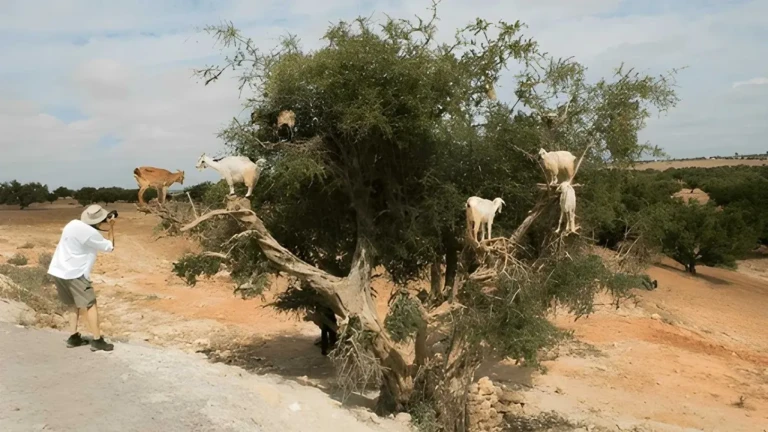
Wildlife photography shines when you meet Morocco’s tree-climbing goats. You’ll need the right gear, camera settings, and composition skills to capture their fun.
A DSLR or mirrorless camera with a telephoto lens (at least 200mm) is best. A tripod helps keep your camera steady, even in dim light.
Choose a fast shutter speed (1/1000th of a second or faster) to freeze the goats’ actions. A wide aperture (like f/2.8) helps your subject stand out against the background.
Use the rule of thirds to frame your shot. Early morning and late afternoon light can make your photos richer.
Stay far from the goats to not stress them. Never use bait or food to get a photo.
| Camera Setting | Recommended Value |
|---|---|
| Shutter Speed | 1/1000s or faster |
| Aperture | f/2.8 |
| ISO | 100-400 |
When we see goats in trees, we must think about the challenges they face. The argan forests in Morocco are more than just a sight. They are a delicate ecosystem that needs our care.
Argan forests are threatened by deforestation, climate change, and overgrazing. These issues can cause soil erosion and loss of biodiversity. They also reduce the number of argan fruits, harming the goats that depend on them.
Human actions, like expanding agriculture and building cities, harm argan forests too. It’s important to find a balance between human needs and protecting this unique place.
UNESCO has named the Arganeraie Biosphere Reserve to protect argan forests. This move aims to manage the ecosystem sustainably and save its biodiversity.
The reserve has rules for grazing, plants trees, and helps local communities use land wisely. These steps keep the argan forests healthy and help the goats that climb trees.
Visitors to the argan area can help by supporting local businesses that are green. Choose tours and buy argan oil products that are eco-friendly. These actions help a lot.
Together, we can keep Morocco’s argan forests safe. This way, the amazing sight of goats climbing trees can continue.
The sight of goats in trees is truly amazing. It shows how adaptable and strong these animals are. Morocco’s goats are famous for climbing argan trees. This gives visitors and locals a special experience.
These goats do more than just climb trees. They help spread argan seeds and make argan oil. Exploring where they live, you’ll learn more about the culture and traditions around them.
Seeing tree-climbing goats is a memorable experience. It’s great for wildlife lovers, photographers, or anyone who loves nature. By supporting tourism and conservation, we can keep this wonder alive for future generations.
In Morocco, goats climb argan trees to eat the fruit. This is a unique sight that attracts tourists. It’s also a symbol of the region.
You can see goats climbing trees in Morocco’s argan forests. This is common in Souss-Massa and Essaouira, where the argan tree grows.
Goats climb argan trees for food. The fruit is full of nutrients. It’s a valuable food source, even when other food is scarce.
Yes, the goats in Morocco have special features. They have flexible joints and strong hooves. These help them climb and move in the trees easily.
Feel free to contact us via email, phone, or WhatsApp chat.
Discover the famous Moroccan coffee, a unique blend of coffee and milk, for
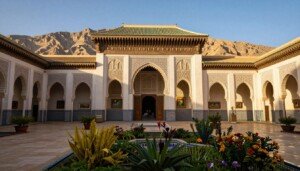
Did you know a Moroccan palace can hold over a thousand years of
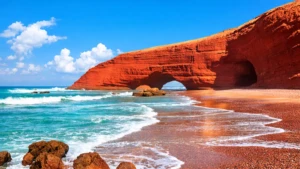
Discover the stunning Legzira Beach in Morocco – a must-visit destination with towering
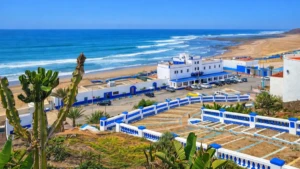
Explore the best things to do in Sidi Ifni, from beaches and views
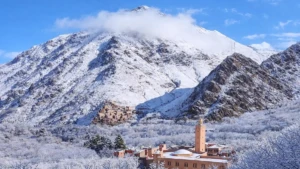
Discover the top things to do in Imlil, Morocco, from hiking the Atlas
Discover the top things to do in Dakhla, Morocco—your ultimate guide to this

Plan your perfect trip to Al Hoceima, Morocco. Our how-to guide reveals the