
3 days tour from marrakech to merzouga: 3-Day Guide
Plan smarter with this 3 days tour from marrakech to merzouga guide, including

Did you know Moroccan ceramics have been a big part of the country’s culture for centuries? They have a history that goes back over a thousand years. Each piece of pottery shows the country’s rich heritage.
Moroccan pottery is known for its bright colors and detailed designs. As you learn more about Moroccan ceramics, you’ll see how important this art is. You’ll also find out a lot of interesting facts about it.
Exploring Moroccan pottery reveals a rich history. It shows Morocco’s role as a crossroads of cultures. Moroccan pottery is more than a craft; it’s a symbol of the country’s diverse heritage.
Moroccan pottery’s history goes back to ancient times. It was shaped by Berber, Arab, and Mediterranean cultures. The country’s location helped in sharing ideas and techniques.
The Berbers, Morocco’s original inhabitants, started pottery. They passed down their techniques for generations. Arabs brought new glazing and designs. Mediterranean influences added specific materials and motifs.
| Culture | Influence on Moroccan Pottery | Notable Techniques or Designs |
|---|---|---|
| Berber | Initial pottery practices, traditional designs | Use of natural materials, earthy tones |
| Arab | Introduction of glazing, new designs | Glazing techniques, geometric patterns |
| Mediterranean | Use of specific materials, motifs | Use of cobalt blue, floral motifs |
Moroccan pottery has changed over the centuries. It reflects Morocco’s political, social, and cultural shifts. Each era, from the Idrissid dynasty to the Alaouite period, has influenced the craft.
The craft’s evolution is a tale of adaptation and innovation. Potters have always innovated while staying true to their heritage.
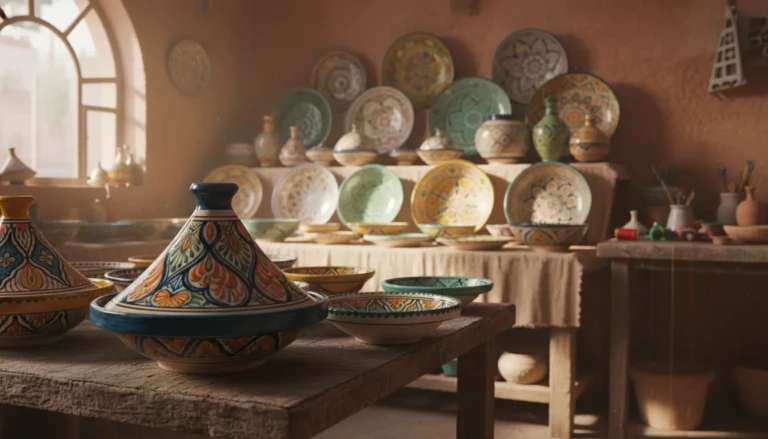
Exploring Moroccan pottery reveals a wide range of styles shaped over centuries. These styles are influenced by Morocco’s location between Africa, Europe, and the Middle East. The country’s rich cultural heritage is seen in the varied techniques, designs, and materials used across different areas.
Fez Blue Pottery is a standout in Moroccan ceramics, famous for its bright blue glaze and detailed designs. It comes from the ancient city of Fez, where artisans have honed their craft for centuries. The blue pottery of Fez is not just beautiful but also tells the story of Fez’s past as a cultural and trade center.
Safi Pottery comes from the coastal city of Safi and is known for its earthy colors and geometric patterns. It’s closely tied to the Gnawa culture, showing Safi’s ties to sub-Saharan Africa. Safi Pottery is a favorite among those who love Moroccan art, thanks to its unique style.
Tamegroute Pottery is famous for its green glaze and the special techniques used by Tamegroute artisans. This style is deeply connected to the Ziz Valley, where local clay and unique firing methods are used. Tamegroute Pottery is prized for its beauty and its role in preserving Morocco’s traditional craftsmanship.
Each style adds to the rich variety of Moroccan pottery, giving a glimpse into the country’s diverse culture. Whether you’re drawn to Fez’s blue glazes, Safi’s earthy tones, or Tamegroute’s green glazes, Moroccan pottery is sure to enchant with its beauty and skill.
Finding real Moroccan pottery takes a sharp eye and knowledge of its roots. True pieces are stunning and tell the story of Morocco. To know you’re getting or enjoying real Moroccan clay pottery, just follow these tips.
The way a piece is made shows if it’s real. Look for small flaws that show it’s handmade, like uneven shapes or patterns. Real Moroccan pottery has detailed designs made with care by skilled hands.
True Moroccan pottery is made from local clay and natural stuff. It feels heavy because of the clay’s density. Also, check if the material looks too perfect or has artificial colors.
Good sellers and artists give out authenticity certificates. These papers tell you about the materials, who made it, and sometimes a special code. Checking this info makes sure your pottery is the real deal.
By using these steps, you can spot and love real Moroccan pottery. It makes your appreciation and understanding of this art even better.
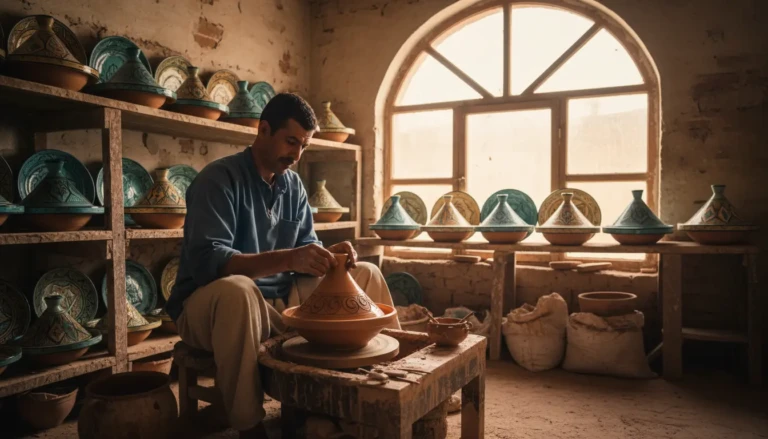
Exploring Moroccan pottery reveals a deep heritage. The making process showcases the potters’ skill and creativity.
The journey starts with clay preparation. This step is key to the pottery’s quality. Moroccan potters use local clay, refining it with traditional methods.
They mix the clay with water and natural materials. This blend is kneaded to remove air. This makes the clay perfect for shaping.
Moroccan pottery is shaped by hand or on a wheel. Hand-throwing lets artisans craft detailed designs. Wheel-throwing is for symmetrical pieces like vases.
Wheel-throwing demands precision. The potter shapes the clay as it spins. This skill is essential for creating balanced pieces.
After shaping, pottery is fired in a kiln. This process hardens the pottery. It uses high temperatures to achieve durability.
| Firing Technique | Description | Result |
|---|---|---|
| Oxidation Firing | Firing in an oxygen-rich environment | Bright, vibrant colors |
| Reduction Firing | Firing in an oxygen-poor environment | Earthy tones and metallic effects |
| Raku Firing | Low-fire technique with rapid cooling | Distinctive crackle patterns and earthy colors |
Learning about these techniques shows the artistry in Moroccan pottery. Each piece reflects the culture and the artisans’ skill.
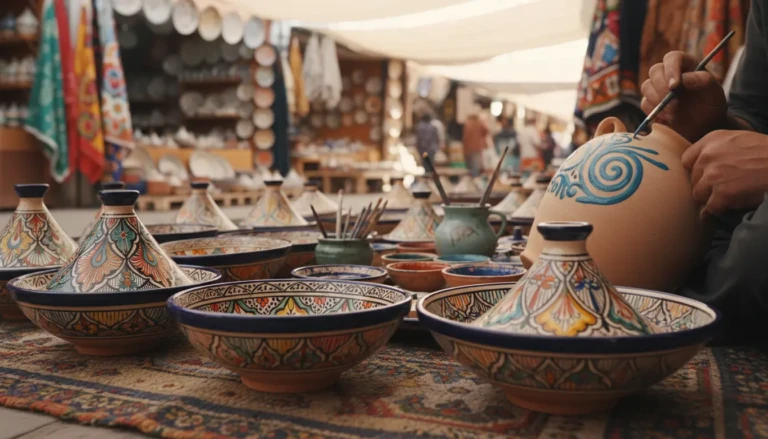
Moroccan pottery is known for its unique designs and colors. These features make the pottery beautiful and carry deep cultural meanings.
The designs in Moroccan pottery come from the country’s rich culture. This includes Islamic art, Berber traditions, and Mediterranean influences. The patterns and motifs tell stories and symbolize Moroccan life.
Geometric designs are a key part of Moroccan pottery. You’ll see patterns like chevrons, hexagons, and interlocking shapes. Each pattern has its own meaning, showing different parts of Moroccan culture.
For example, chevrons mean protection and strength. Hexagons are linked to blessings and good luck. Knowing these meanings can make you appreciate Moroccan pottery more.
Colors in Moroccan pottery have deep meanings. The choice of color depends on the region, the pottery’s use, and the artist’s taste.
Blue is a common color, meaning protection and spirituality. Green stands for prosperity and good luck. Red is for passion and energy. These colors add depth and meaning to the pottery.
| Color | Symbolic Meaning |
|---|---|
| Blue | Protection, Spirituality |
| Green | Prosperity, Good Fortune |
| Red | Passion, Energy |
Moroccan pottery varies greatly by region. Each area has its own designs, techniques, and colors. These reflect the local culture and traditions.
In Fez, pottery is famous for its blue glaze. Safi is known for its bright colors and detailed designs. Knowing these differences helps you see the beauty and diversity of Moroccan pottery.
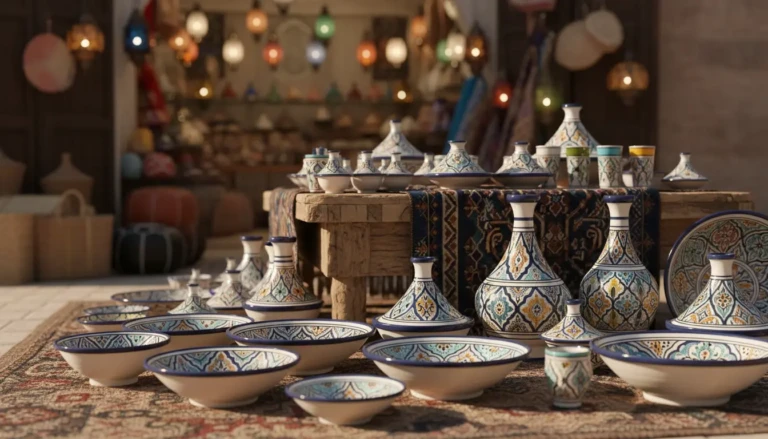
To get a real piece of Moroccan pottery, you need to know where to find it. Buying authentic Moroccan pottery is rewarding, whether you collect or just want unique decor.
Start by looking for trusted Moroccan pottery shops or online platforms. Ask friends, family, or collectors for tips. They might know where to find authentic pieces.
When shopping online, check the seller’s reviews and ratings. A good online store will have clear policies on shipping, returns, and customer service. Look for certifications or memberships that prove the products’ authenticity.
It’s important to check the price and quality of Moroccan pottery. Real pieces can cost a lot, depending on the craftsmanship, materials, and artist’s reputation.
| Aspect | Low Quality | High Quality |
|---|---|---|
| Craftsmanship | Rough, uneven, or lacking detail | Intricate, precise, and well-finished |
| Materials | Low-grade clay or synthetic materials | High-quality clay, natural glazes |
| Price | Very low, potentially indicating mass production | Higher, reflecting the skill and time invested |
Before buying, ask important questions. Whether in a store or online, ask about the pottery’s origin, creation techniques, and materials.
For online buys, ask about shipping and insurance. Also, know the return policy in case you’re not happy with your purchase.
By following these steps, you can buy authentic, high-quality Moroccan pottery. It will be a great addition to your collection or home decor.
Keeping your Moroccan pottery beautiful means knowing how to care for it. This art form is delicate and needs gentle handling. This helps keep it in great shape.
Regular cleaning is key to keeping your Moroccan pottery looking good. Start by dusting it with a soft, dry cloth. This removes loose particles.
For deeper cleaning, use a damp cloth. But don’t soak the pottery in water. Water can harm the glaze or clay.
It’s important to prevent damage to your Moroccan pottery. Be careful when handling it to avoid drops that can cause chips or cracks. When you display it, pick a spot that’s stable and away from direct sunlight. Sunlight can make the colors fade.
| Prevention Tips | Benefits |
|---|---|
| Handle with care | Prevents chips and cracks |
| Display away from direct sunlight | Prevents fading and discoloration |
| Use felt pads on the bottom | Prevents scratching of surfaces |
If your Moroccan pottery gets damaged, there are ways to fix it. For small chips or cracks, a ceramic repair kit can help. For bigger damage, a professional restorer who knows ceramics can be a good choice.
Restoration can include re-glazing, re-firing, or re-painting. It’s important to pick a restorer who knows Moroccan pottery techniques. This ensures the repair is done right.
Adding Moroccan pottery to your home decor can make it stand out. It brings a rich cultural vibe and bright colors. Moroccan pottery is known for its detailed designs and earthy colors. You can use it to make a bold statement or blend it into your decor.
Think about the colors, style, and size of the pottery you choose. A bold, colorful piece can be a great centerpiece in a simple home. But, if your home is already full of colors, pick something more subtle. This adds texture and interest without being too much.
| Style | Description | Ideal For |
|---|---|---|
| Fez Blue Pottery | Known for its vibrant blue glaze and detailed geometric patterns. | Modern, elegant spaces. |
| Safi Pottery | Characterized by its earthy tones and natural designs. | Rustic or bohemian decor. |
| Tamegroute Pottery | Famous for its green glaze and simple designs. | Contemporary, minimalist spaces. |
How you display your Moroccan pottery matters a lot. Try grouping pieces for a beautiful vignette on a shelf. Or, use a standout piece as a centerpiece. Mixing it with other items like textiles or metalwork adds more interest.
Moroccan pottery is very versatile. It fits well with many decor styles, from modern to traditional. To look good together, balance the bold pottery with simpler items. For example, pair a bright vase with neutral furniture and simple textiles.
By adding Moroccan pottery to your decor, you bring a unique cultural beauty to your home.
Start a creative journey by making your own Moroccan-inspired pottery at home. This DIY guide will show you how, from getting materials to adding authentic Moroccan designs.
To begin your DIY pottery project, you’ll need some basic stuff. You’ll need clay, a pottery wheel or hand tools, a kiln or firing service, and glazes in Moroccan colors like cobalt blue and terracotta red.
Choose the right clay for your project. Earthenware clay is great for beginners because it’s easy to work with and looks beautiful.
With your materials ready, it’s time to learn basic forming techniques. You can use a pottery wheel for symmetrical pieces or hand-build for unique, rustic items.
For hand-building, start by wedging your clay to remove air pockets. Then, use coiling or pinching to shape your piece. On a wheel, practice centering and shaping your clay.
Moroccan pottery is famous for its detailed geometric patterns and bright colors. To add an authentic touch, study traditional Moroccan designs. Use underglaze painting or glazing to apply them.
Think about using stencils or stamps for the detailed patterns of Moroccan art. Also, try different glaze combinations to capture Moroccan color symbolism.
By following these steps, you can make stunning, authentic Moroccan-inspired pottery. These pieces will bring exotic elegance to your home decor.
Exploring Moroccan pottery has shown you its rich history and diverse styles. You’ve seen the vibrant colors and detailed patterns. Moroccan pottery truly reflects the country’s cultural heritage.
Appreciating Moroccan pottery means admiring beautiful pieces and supporting the artisans. Whether you buy authentic pieces, use them in your decor, or make your own, you’re part of this tradition.
As you keep exploring Moroccan pottery, it will bring elegance and warmth to your home. Its mix of traditional and modern styles will inspire and delight you. So, start your journey into Moroccan pottery – it’s a rewarding experience.
Moroccan pottery is very important in Berber culture. It shows the community’s history, traditions, and values. This is through its designs, patterns, and how it’s made.
Look at the craftsmanship, clay type, and firing methods to tell the difference. Traditional pieces have unique, handmade touches.
Fez Blue Pottery is famous for its bright blue glaze and detailed geometric patterns. It uses special clays. This style comes from Fez and is loved for its beauty and skill.
Yes, some Moroccan pottery, like tagines, is made for cooking. To care for it, avoid sudden temperature changes. Use mild cleaners and dry it well after washing.
Feel free to contact us via email, phone, or WhatsApp chat.
Plan smarter with this 3 days tour from marrakech to merzouga guide, including

Your one-stop guide to navigating Casablanca Airport like a pro. Get essential tips
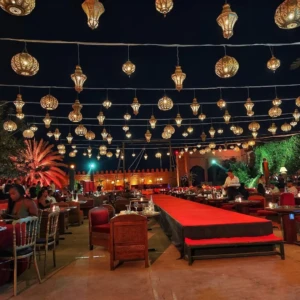
Avoid tourist traps with this restaurants marrakech morocco guide to 15 trusted places

Discover the best desert clothing for Sahara travel, from hot weather outfits to
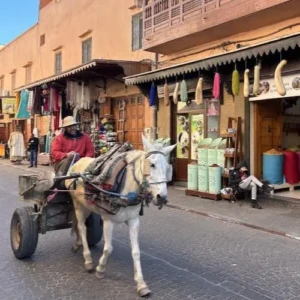
Curious about Morocco? Morocco Facts Interesting Readers Will Love, with travel tips, culture,

Need family vacation ideas? Morocco Family Tours shares 7 amazing Morocco destinations for
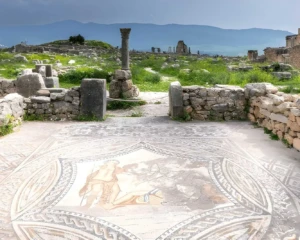
Planning a day trip? volubilis morocco offers Roman ruins, mosaics, and easy travel